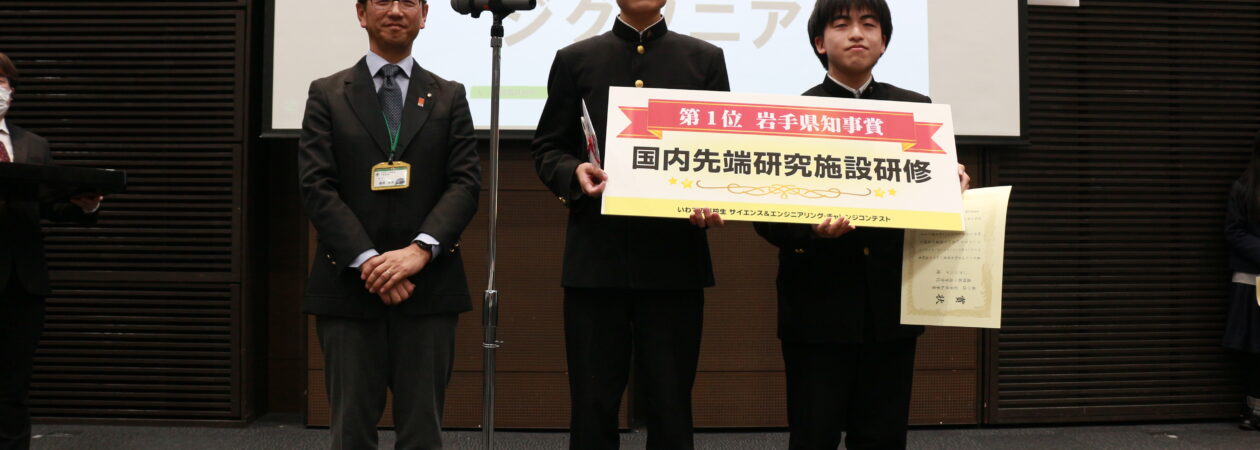
In Iwate Prefecture, there are various initiatives being developed to train the next generation of scientists and engineers. One such initiative is the Iwate High School Science and Engineering Challenge Contest, held every year by the Bureau of International Linear Collider (ILC) Promotion. This contest sees high school students within the prefecture coming up with their own research themes related to physics, chemistry, or engineering, then competing based on scientific reasoning and presentation skills. It was held for the 6th time in December 2025 in Morioka, and a total of 37 students from 5 different high schools, broken up into 9 teams, participated and presented their research findings. The judges were college professors, researchers, and faculty members—experts in their respective fields.
One unique aspect of this contest is that students were able to receive guidance from an expert in advance in order to prepare. Researchers offered the students advice starting one or two months before the contest, helping with the research process, data sorting, presentation organization, and more.
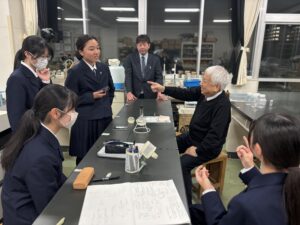
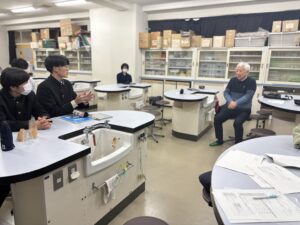
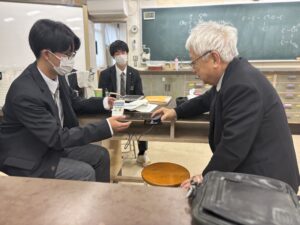
This wasn’t just superficial research for show—the instruction emphasized the importance of critical thinking and the fundamentals of research, and it was apparent that the students’ inquisitive minds were developing further. Through this kind of advance guidance, the students continued to polish up their research until they reached the day of the contest.
On that day, it had been snowing heavily since morning. Many students were unable to make it to the opening ceremony due to train delays, but fortunately all participants safely arrived before presentations began.
Students were allotted 15 minutes for their presentations. Here, their ability to explain the background of their research, their methods, and the results they produced in a limited amount of time was put to the test.
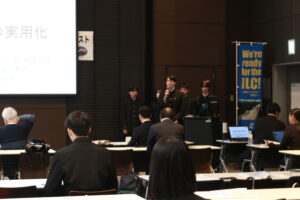
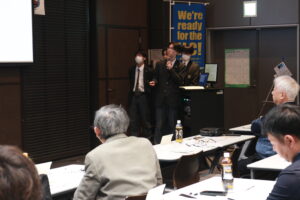
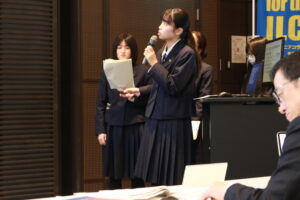
After each 15-minute presentation, there was a question-and-answer session with the judges. The students faced the experts’ difficult questions without being thrown off and answered with confidence in their analysis. It felt like the moment they took their first step as researchers.
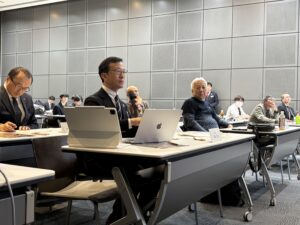
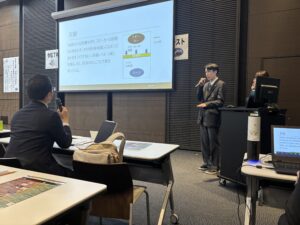
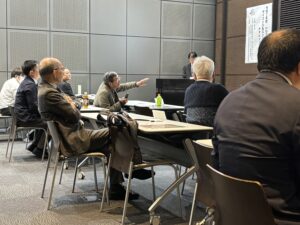
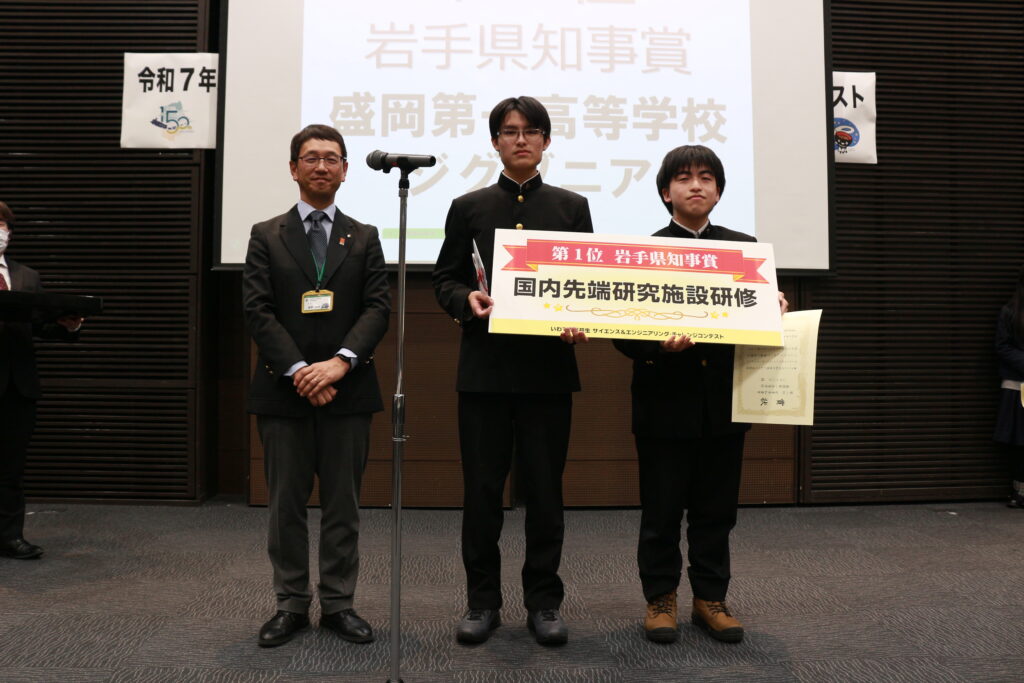
Amongst the diverse research presented at the contest, Morioka First High School’s team Jigzonia received particularly high praise from the judges and ended up being selected to win first place (Iwate Governor’s Award). Their research theme was Development of a Self-Solving Jigsaw Puzzle Robot. The team was recognized for their high degree of scientific understanding, advanced presentation skills, and accurate responses to the judges’ questions. Next, we would like to cover Jigzonia’s research focus and process.
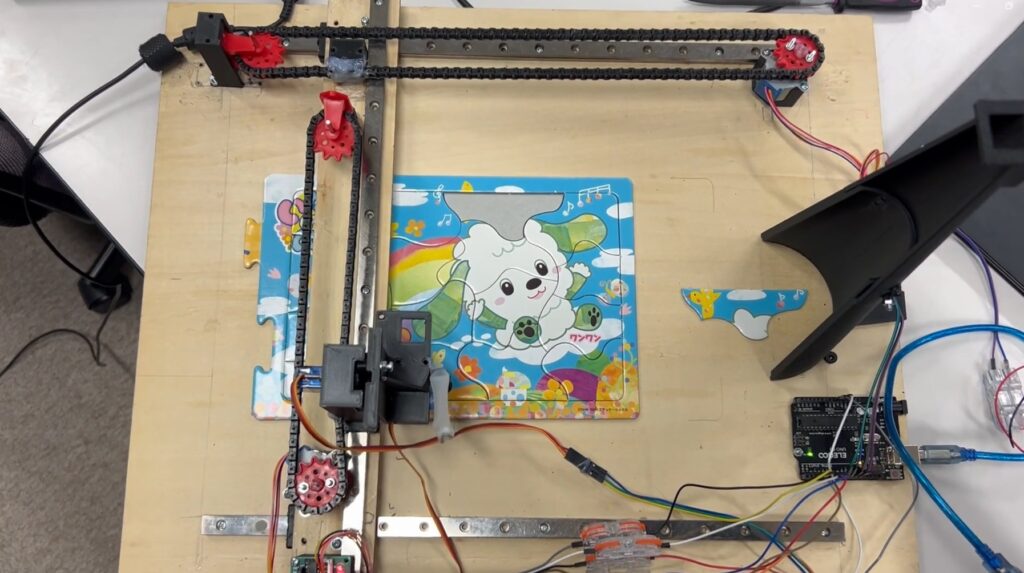
Jigsaw puzzles are a well-known form of entertainment all over the world, in which players must recognize and correctly choose from a set of pieces that differ in shape and pattern to assemble a final picture. Even for humans, this task can prove difficult at times. So how did this team manage to give a robot such advanced judgement that it can solve these puzzles?
To assemble the puzzle, the following three processes are repeated.
- A puzzle piece is analyzed with a camera.
- The piece is moved to a specified spot, then placed.
- A new puzzle piece is prepared.
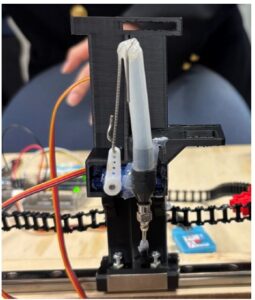
One other unique part of this project is that many of the robot’s parts were made by the students themselves using their school’s 3D printer. Also, pneumatic pressure was used for the mechanism that lifts the puzzle pieces. Despite being a small device, it is able to stably lift comparatively large pieces.
While being advised by an expert before the contest, the team attempted to use an AI camera to scan the puzzle pieces based on their RGB (Red-Green-Blue) values. However, the red and green values came out the same, making it impossible for the robot to accurately distinguish between the two colors. Therefore, the students thought that the AI camera was perhaps automatically performing color correction to make its images more visible to the human eye.
In order to solve this problem, they turned to an image processing technique called Hu moments. Hu moments are an index utilized to express the characteristics of an object’s shape, and even if the image’s location, angle, or size changes, the values remain constant. By focusing on shape and not color, this method succeeded in reliably identifying puzzle pieces.
But the team didn’t stop at solving puzzles—they went further and considered future applications for their research as well. They wish to apply the algorithm and robot parts they developed to product sorting operations and technology that assists visually impaired persons. Additionally, potential applications in the transportation and installation of components at the ILC construction site were also touched upon, highlighting the many future prospects that this research holds.
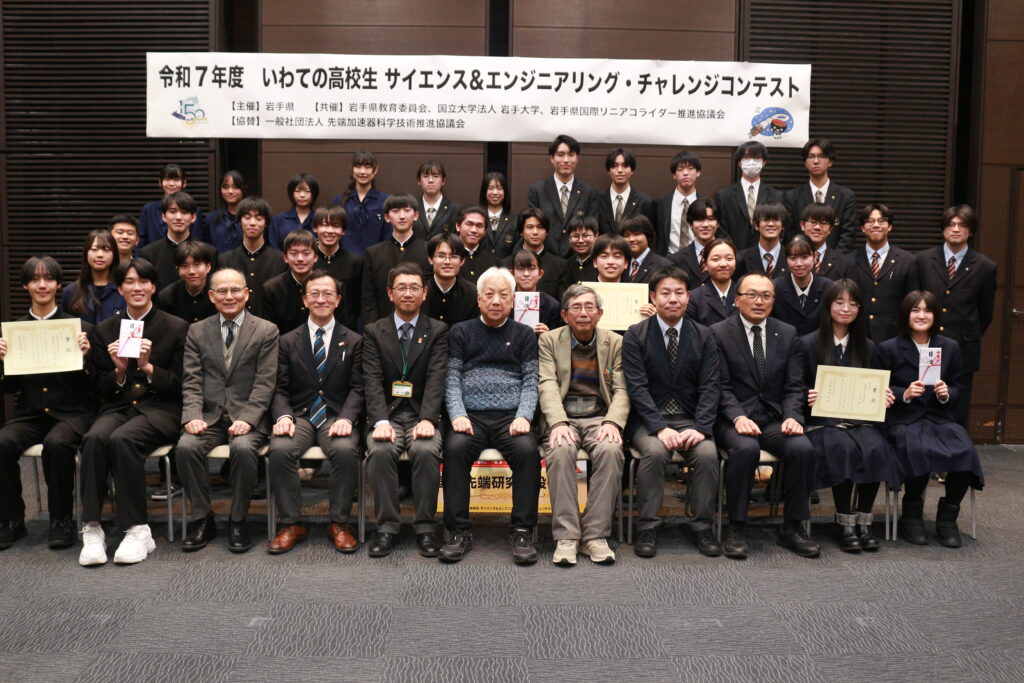
Other teams’ research included topics such as a storm glass that predicts temperature, a fire extinguisher that uses sound to put out fires, and techniques to convert a mantis shrimp’s ultrafast punch into electrical energy. With such a diverse range of research displayed, the contest became a high-level conference where participants learned from and inspired each other.
The students of team Jigzonia from Morioka First High School who took first place are scheduled to participate in a study tour in March, where they will visit leading national research facilities (such as J-PARC and Super-Kamiokande). This experience of actual research settings will greatly inspire the students and give them a chance to further deepen their interest in future career paths and research.
We at the Bureau of ILC Promotion hope that through these initiatives, the young generation—our future leaders—will discover the appeal of science and engineering, and continue to tackle research challenges that engage with the world.
Japanese
【未来へ踏み出す高校生の挑戦-いわての高校生サイエンス&エンジニアリング・チャレンジコンテストの開催-】岩手県では、次世代の科学者・エンジニアを育てる取組を進めています。国際リニアコライダー(ILC)推進局が毎年主催する「いわての高校生サイエンス&エンジニアリング・チャレンジコンテスト」は、物理・化学・工学の分野で県内の高校生が自ら設定したテーマに挑戦し、科学的思考力やプレゼンテーションのスキルを競うコンテストです。6回目の2025年は12月に盛岡市で開催され、5つの高校から9チーム37名が参加し、研究成果を発表しました。審査員は各分野に精通した大学教授や研究者、教員で構成されます。
このコンテストに向けて、生徒たちは専門家の事前指導を受けることができるのも特徴のひとつです。研究の進め方やデータの整理方法、プレゼンテーションの組み立て方などについて、コンテストの1~2か月前から研究者が助言を行ってきました。
上辺だけの研究ではなく、研究の根本をよく考えることを大切にした指導が行われ、生徒の探究心がさらに高まる様子がありました。こうした事前指導を経て、生徒たちはそれぞれの研究を磨き上げ、コンテスト当日を迎えることとなります。
当日はなんと朝から大雪。列車の遅れで多くの生徒が開会に間に合わないトラブルがありましたが、無事に全員が発表までに到着することができました。
発表時間は15分。限られた時間の中で、自分たちの研究の背景や実験方法、そこで得られた結果をどう伝えるかが試されます。
15分の発表のあとは、審査員との質疑応答があります。専門家からの鋭い質問にも戸惑うことなく、自分たちの考察に自信をもって答える姿は、研究者としての第一歩を踏み出した瞬間を感じさせるものでした。
多様な研究が発表される中で、審査員から特に高い評価を受け、今回の第1位(岩手県知事賞)に選ばれたのは、盛岡第一高等学校の「ジグゾニア」チームです。彼らが取り組んだテーマは、「ジグソーパズル組み立て自立型ロボットの開発」。研究に対する理解度、プレゼンテーションスキルの高さ、そして当日の審査員からの質疑へ的確に応答したことが評価されました。ここでは、「ジグゾニア」チームの研究内容とその挑戦の過程をご紹介したいと思います。
ジグソーパズルは、世界中で親しまれている遊びです。形や絵柄が一つ一つ異なるピースを正しく認識し、組み立てる作業は、ときに人間にとっても難しいものがあります。その高度な判断力をロボットにどのように身につけさせ、パズルの完成にいたるのでしょうか。
パズル組み立ては、次の3つの工程を繰り返すことで進められます。
①パズルピースをカメラを使って解析
②指定の位置まで移動させ、配置
③新たなパズルピースの用意
このロボットは、部品の多くを生徒たちが自作している点も特徴です。学校に設置された3Dプリンタを使って部品を製作し、パズルピースを持ち上げる仕組みには空気圧を利用しました。小型の装置でありながら、比較的大きなピースも安定して持ち上げることができます。
専門家の事前指導のときは、このチームはAIカメラを使って、パズルピースの色をRGB(赤・緑・青)の値で読み取る方法に挑戦していました。しかし、赤と緑の値が同じように出てしまい、色の違いを正確に判別できないことに悩んでいました。そこで、生徒たちはAIカメラが、人の目に見えやすいよう自動的に色補正を行っている可能性があると考えました。
この問題を解決するために着目したのが、「Hu(フー)モーメント」と呼ばれる画像解析の手法です。Huモーメントは、画像の位置や向き、大きさが変わっても数値が変わらない「形の特徴」を表す指標です。色ではなく形そのものに注目することで、パズルピースを安定して識別することに成功しました。
さらにチームは、この研究をパズル組み立てにとどめず、将来への応用も提案しました。今回開発したアルゴリズムやロボット部品は、商品の仕分け作業や、目が不自由な人を支援する技術へ応用したいと考えました。また、ILC建設の現場における部品の運搬や設置作業への活用の可能性にも触れ、この研究が持つ将来性の高さを示しました。
他にも、気温を予測するストームグラスの研究や、音で消火する音波消火器の研究、シャコの高速パンチを電気エネルギーに変える研究など、多種多様な研究が披露され、お互いに刺激し合えるレベルの高いコンテストとなりました。
第1位に輝いた盛岡第一高等学校「ジグゾニア」チームの生徒たちは、今年3月、日本国内の先端研究施設(J-PARC、スーパーカミオカンデ等)を訪問する派遣研修が予定されています。実際の研究現場に触れる経験は、生徒たちにとって大きな刺激となり、将来の進路や研究への関心をさらに深める機会となります。
ILC推進局では、こうした取り組みを通じて、次世代を担う若い世代が科学や工学の魅力に触れ、世界に開かれた研究に挑戦していくことを期待しています。