Continuing after Kuzumaki Wine for You and Me, this will be our second article about wineries in Iwate. This time, we visited Shiwa Winery in Shiwa, Iwate.
Shiwa is a town located 20 kilometers south of the prefectural capital Morioka. The area is home to a rich fruit growing industry, and approximately half of Iwate’s grapes are produced here.
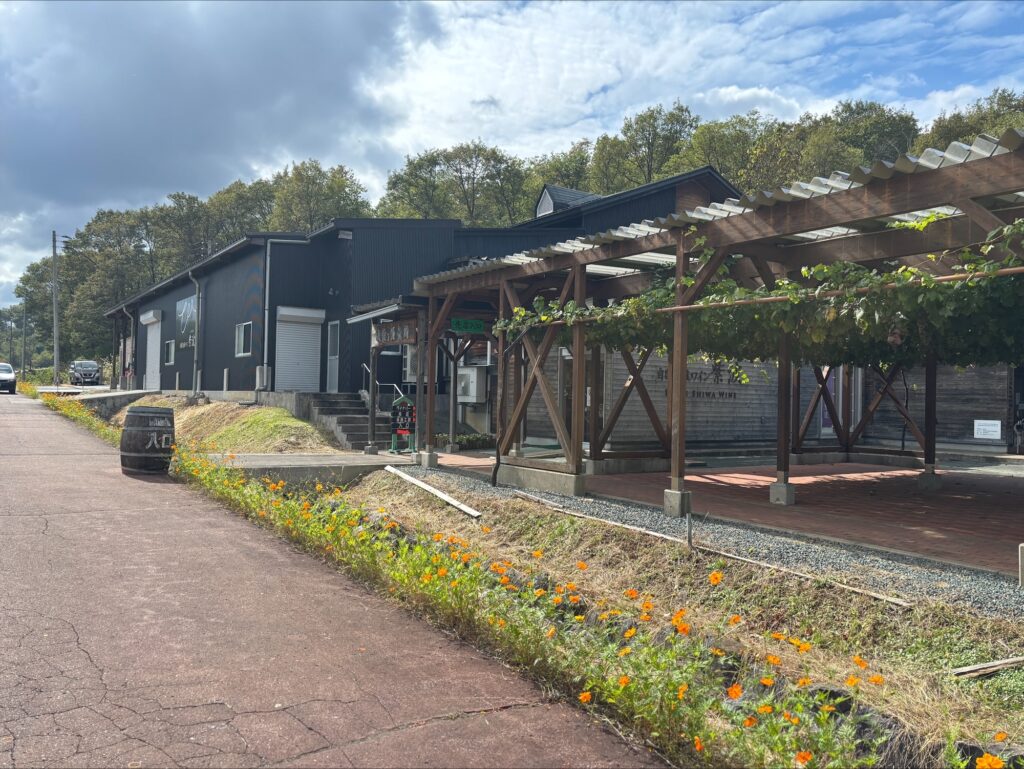
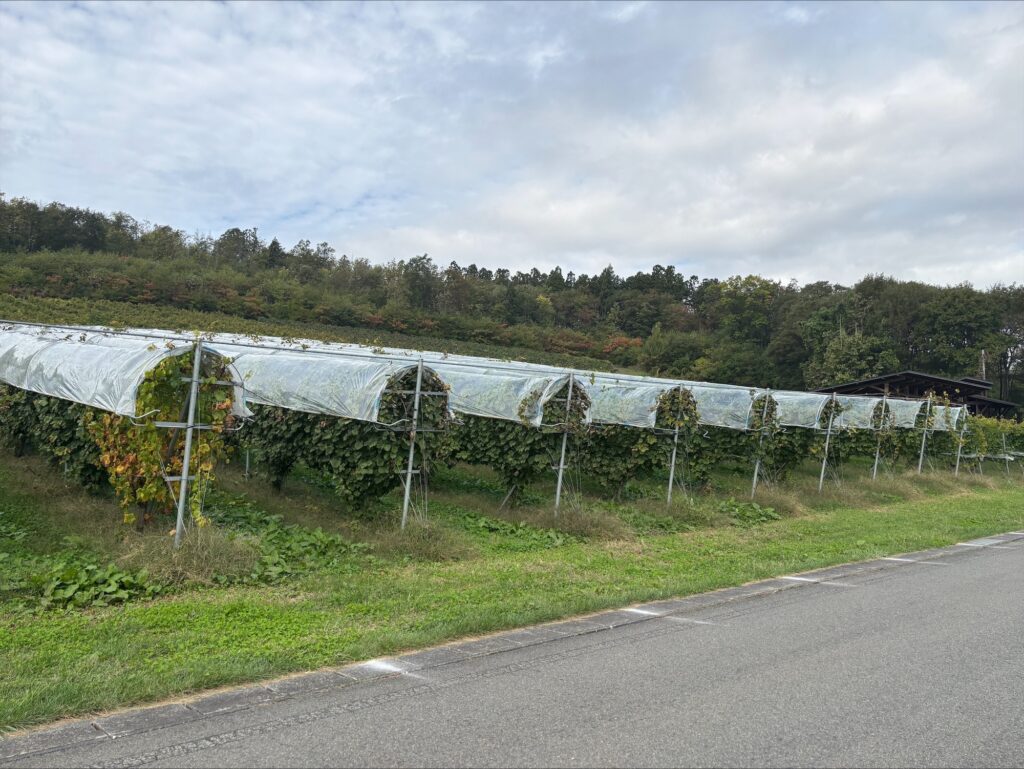
left:Shiwa Winery exterior. Wine festivals are held here too!
right:Shiwa Winery exterior. Wine festivals are held here too!
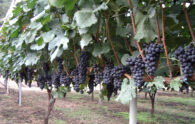
Shiwa Winery’s motto, “homegrown and homebottled,” refers to their policy of using 100% Shiwa-grown grapes to produce wine. This style of winery that stays local—from the grape growing to the winemaking—is still quite rare in Japan.
Winemaking in Shiwa was originally inspired by local farmers wishing to make wine out of the grapes they grew. Their company was established in 2003, and wine production began in 2005. Currently, 25 farms are involved in Shiwa’s winemaking business. Shiwa Winery’s unwavering commitment to only using wine grapes is one of their unique characteristics not often seen in other regions.
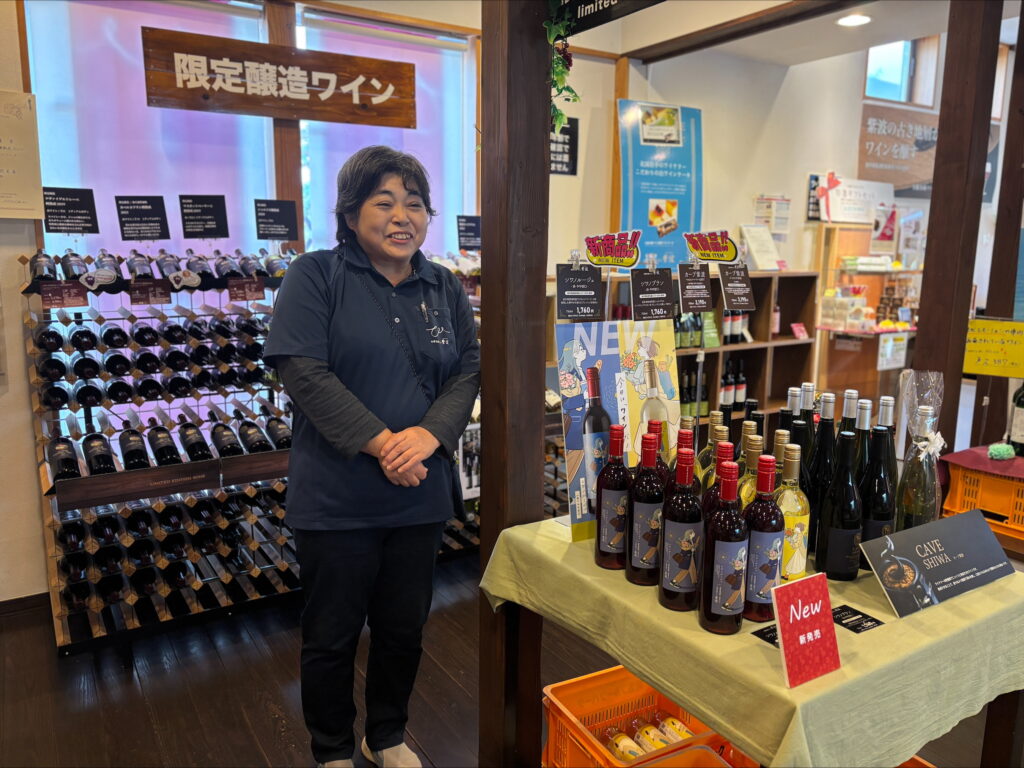
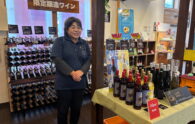
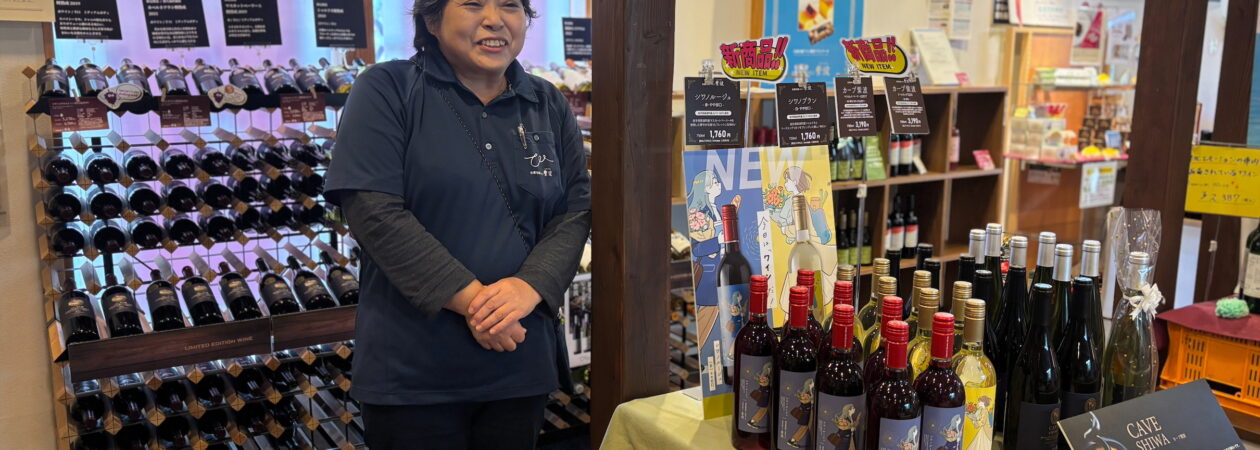
We were shown around by Ms. Sugawara. She’s a huge wine lover, and after retirement her passion only kept growing, so she started working here! She says that “good grapes are born from good fields,” revealing her trust and confidence in this land. Her message to young workers and her successors is “Instead of chasing trends, cherish what you care about right now, and keep sharing research and information about wine.”
Wine tasting is also available inside the facility. 10 types are available for free, and another 6 types can be sampled for 100 yen per glass. The first one we tried was Shiwa Winery’s famous Represent Shiwa. It is a crisp and refreshing dry white wine, with a dignified flavor that allows you to feel Shiwa’s homegrown and homebottled resolve. The next wine, Oak-Aged Chardonnay, was full-bodied despite being a white wine, and had a depth that would pair nicely with rich, flavorful dishes.
As expected from a northern region, Shiwa Winery’s red wines are mainly light and medium-bodied. Muscat Bailey A 2019 is smooth and pleasant on the palette with a satisfying finish. The complimentary tasting wines also offered flavors that would harmonize well with everyday meals, making us wish we always had a bottle of both the red and white wines on hand.
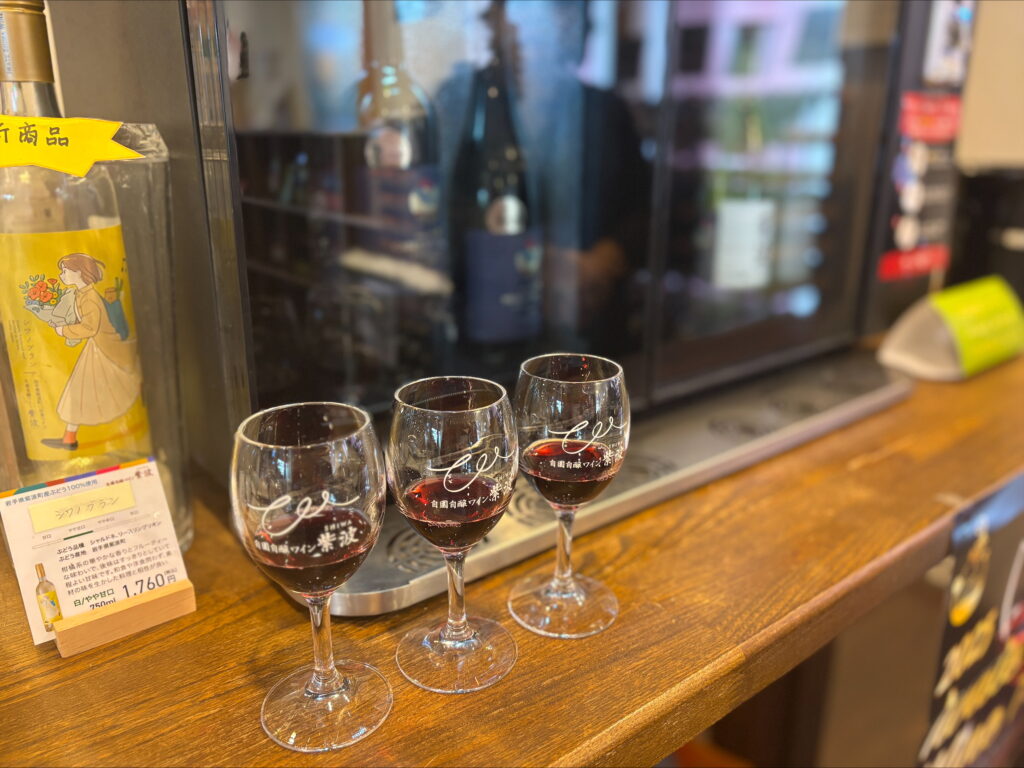
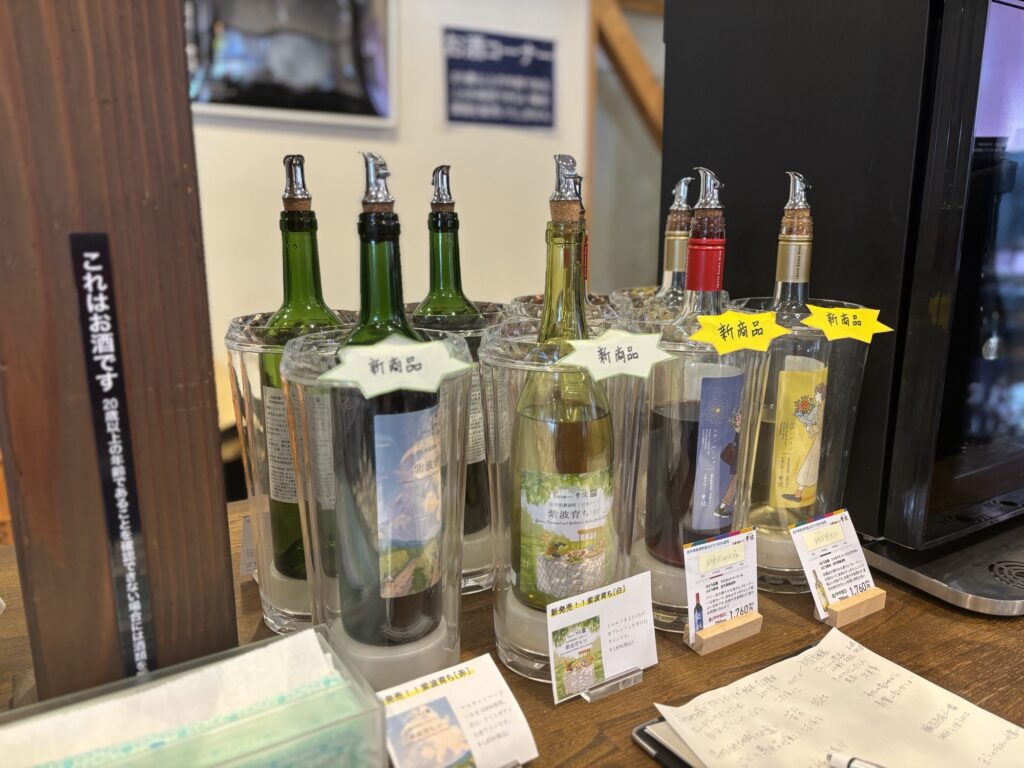
left:Visitors can enjoy three types each of red and white wine
right:Daily wines available for complimentary tasting. The labels are cute too!
The winery also implements several sustainable practices. The leftover pomace and stems from the grapes are reused as fertilizer, which is then also used for onion cultivating. Empty wine bottles are easily collected, as customers receive a 30 yen discount per bottle on their next purchase. While we were on site, we actually saw people return their empty bottles, then proceed to buy more wine.
As for international tourists, there are quite a few from Taiwan, and recently more are coming from Europe as well. It appears that there are also people who heard about Shiwa Winery at their hotels, which prompted them to visit. In fact, a river runs through Shiwa, splitting the town into Japanese sake makers to the west and winemakers to the east. Ms. Sugawara comments that she hopes visitors will try comparing these two drinks, an experience unique to the town.
Furthermore, Shiwa Winery has a membership system with around 500 participants across the country. Three times per year, members can experience grape cultivation and winemaking for themselves. They also get new wines and member-exclusive label wines delivered to their homes, making this system irresistible to wine lovers. Ms. Sugawara, who showed us around on our tour, is of course one of those wine lovers! This wine region is a must-visit destination where you can enjoy the fragrance of orchards filling the town.
In the next article, we’ll cover Edel Wein of Ohasama, the Wine Paradise.
Japanese
【岩手ワインのテロワール(自園自醸でうまれる紫波ワイン編)】「あなたと私のくずまきワイン編」に続く、2回目のワイン特集。今回訪ねたのは、岩手県紫波町にある「自園自醸ワイン紫波」です。
紫波町は県庁所在地の盛岡市から南に20kmのところにある町です。果樹栽培が盛んで、岩手県内のブドウの約半分を生産している果物王国です。
紫波ワインがうたう「自園自醸」とは、町内産ブドウ100%でワインを醸造すること。ブドウづくりからワインになるまでを地域の手で一貫して行うワイナリーは、国内でもまだ少数派です。
紫波町でワインづくりが始まったきっかけは、「自分たちが育てたブドウを、自分たちの手でワインにしたい」という農家の思いからです。2003年に会社が設立され、2005年に醸造が開始されました。現在は25軒の農家がこのワインづくりに参加しています。紫波ワインは、ワイン専用品種にこだわり続けている点も他地域にはない大きな特徴です。
今回案内をしてくれたのは菅原さん。大のワイン好きで、それが高じて定年後にここで働き始めたそう!「いい畑から、いいブドウが生まれるんです。」そう語る菅原さんの言葉には、この土地への信頼がにじみます。若手や後継者に伝えたいことは、流行を追うより「今のこだわりを大切にすること」、そしてワインに関する研究や情報をよく共有することだそうです。
店内では試飲も充実しています。無料で約10種類、有料でも6種類のワインが1杯100円で楽しめます。まずいただいたのは、紫波ワインの代表格「レプリゼント紫波」。フレッシュですっきりした辛口白ワインで、自園自醸の覚悟を感じる凛とした味わいでした。続いての「シャルドネ樽熟成」は、白ながらしっかりした樽のボディ感があり、こってりした料理にも合いそうな深みがありました。
赤は寒冷地らしくライト~ミディアムが中心です。マスカットベーリーA2019はクセがなく、まろやかで後味が心地よいワイン。無料試飲のワインも日常の食卓になじむ味で、赤白ともに常備したい一本だと感じました。
無理のないサステナブルな取組もありました。ブドウの搾りかすや枝は肥料として再利用され、玉ねぎ栽培にも活用されているそうです。空き瓶は回収して、次回購入時に1本30円引きになります。取材中にも、ワインの空き瓶を返却して、新しいワインを購入していくお客さんがいました。
外国人観光客は台湾が多く、最近はヨーロッパからも増加中。宿泊先のホテルで紫波ワインを知って訪れる人もいるといいます。実はこの紫波町、川を挟んで西は日本酒、東はワインがつくられています。そんな土地ならではの飲み比べも、ぜひ体験してほしいと菅原さんは言います。
なお、紫波ワインには全国約500人が参加するオーナー制度があり、年3回、栽培や仕込みが体験できます。新酒やオーナー限定ラベルのワインも届くというワイン好きにはたまらない制度です。今回の案内人、菅原さんももちろんその一人!町にあふれる果樹園の香りを楽しみながら、ぜひ訪れてみてほしいワイン産地です。
次回は、「ワインに選ばれた楽園・大迫のエーデルワイン」をご紹介します。