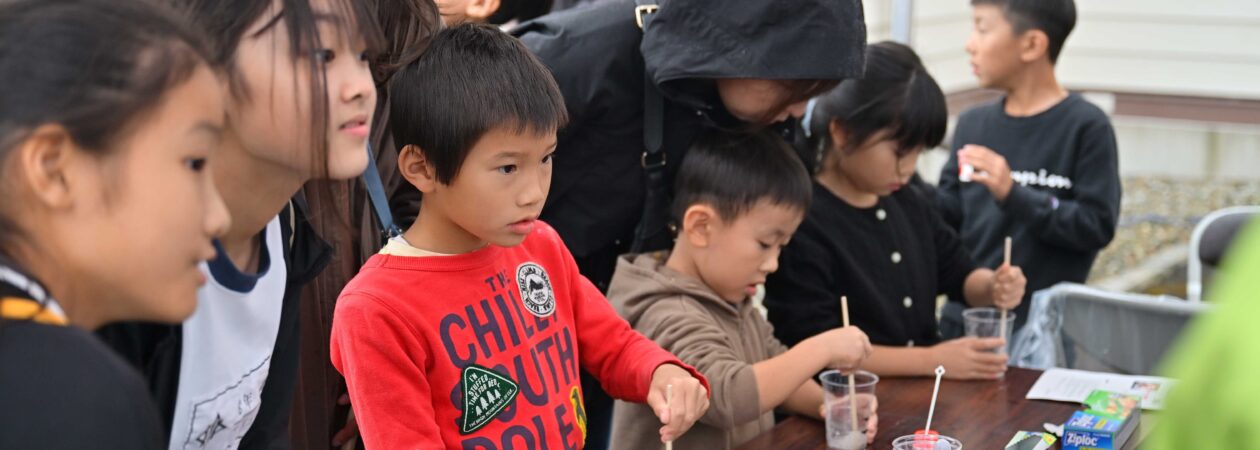
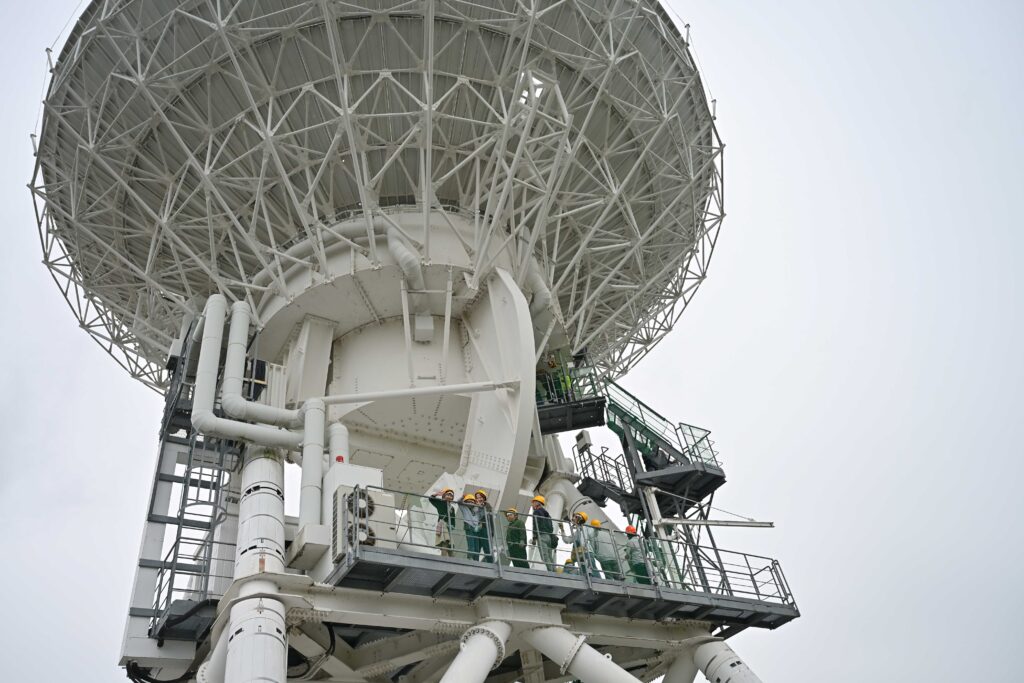
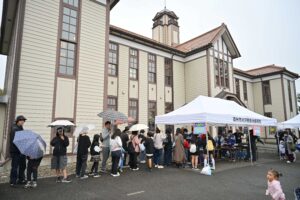
On October 11th, the annual Iwate Galaxy Fest 2025 was held in Oshu. A few years ago, this had been a summer event, but due to concerns about extreme heat, it was moved to October last year. This year, unfortunately, it rained on the day and so the stargazing portion of the festival had to be canceled. Even in these circumstances, it was well attended by families and local people of all ages, which speaks to the popularity of this event. We’ve mentioned it in passing before – check out the recent article on the Z term, for example – but this time, I’d like to talk about it in more depth.
Who Makes This Festival Possible?
The short answer is that cooperation from the National Astronomical Observatory of Japan in Mizusawa, and the Oshu Space and Astronomy Museum, along with participation from Oshu’s Organizing Committee, makes this event a reality. Far from being an isolated ivory tower, the Observatory is a frequent collaborator with the Museum when it comes to activities that promote scientific education to the community.
I also want to say that a large part of the reason why events like this are possible is that local people tend to take an interest in the goings-on at the Observatory, and have a sense of collective accomplishment when breakthroughs are made. In some ways, one could say that learning while having fun at the Observatory is a part of enjoying the local culture of Oshu.
Why Have a Galaxy Fest?
Astronomical research and discoveries have been a part of Oshu’s fabric for quite some time – starting with the establishment of the latitude observatory in the late 19th century, and, more recently, assisting with the first photograph of a black hole in 2019. In other words, astronomy is a part of Oshu’s past and present.
It’s easy to see the impact of the Observatory around Oshu: from the main auditorium called Z Hall and the city bus called Z Bus, to black hole themed treats at confectionary shops, to the Observatory’s 20m radio telescope frequently showing up as part of the backdrop in images of Oshu’s scenery. It makes me think that, if the ILC were to come to Oshu, local people would be interested to learn all about it, and ensure their children knew about it too.
When the Observatory and the Museum team up to have educational events, they often aim to communicate about their activities, but they also plan for ways to get children and families to enjoy learning about scientific ideas more generally. For instance, this festival featured a slime-making booth, a VR experience, and similar.
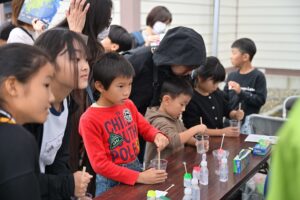
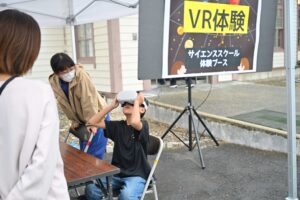
I think harnessing children’s natural curiosity about the world is an excellent way to make science accessible for them, and this is especially true for the complex world of astronomy. The particulars of very long baseline interferometry (VLBI) or exactly how a supercomputer works will almost certainly be too confusing, but nearly every child has looked up at the night sky and wondered about the stars. By creating a space where children can learn by experiencing, both the Observatory and the Museum serve as valuable resources for the community.
About This Year’s Theme
The slogan for this year was “The Role of Computers: From the Earth to Space.” It’s fitting, given that the supercomputer Aterui III was open to be viewed by the public for the first time, and proved to be a big draw for attendees. Named for a leader who lived about 1200 years ago, the idea is that this supercomputer will lead the way in helping us understand more about the universe. And by the way, the name “Aterui”, like the Z term, shows up all around town to this day.
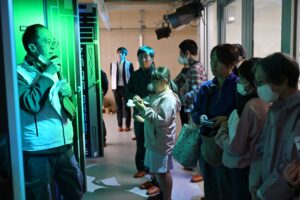
Earlier, I mentioned that astronomy is a part of Oshu’s past and present. With the continuous efforts of the Observatory and the Museum in both research and science communication, and the possibility of the ILC, I think astronomy will be a part of Oshu’s future as well.
Japanese
2025年のいわて銀河フェスタ:科学と天文学をみんなに楽しく10月11日に、毎年行われている「いわて銀河フェスタ」が奥州市で行われました。数年前、これは夏のイベントでしたが、猛暑の恐れから、去年に10月に移動されました。今年は残念ながら当日は、雨のため、星空観望会の部分は中止されました。この状況でも、家族や地域の人は年齢関係なく多数参加し、このフェスタの人気ぶりがうかがえます。この前にもちらっと述べたことがあるが(例えば最近のZ頂についての記事を参照)、今回はより深く説明したいと思います。
このフェスタは誰により実現されますか?
簡単に言えば、水沢の国立天文台と奥州市宇宙遊学館、そして奥州市も実行委員会に参加し、協力しながらこのイベントを実現しています。地域社会から切り離されていることはなく、天文台はよく遊学館と一緒に地域への科学教育を促進する活動をします。
それに加えて、こういう風なイベントが可能になる大きな理由の一つは、地域の人々が天文台の出来事に関心を持ち、新しい発見がされたときには、集団の達成感を感じる傾向があると思います。ある意味では、天文台で楽しみながら学ぶことは、奥州市の地元文化を楽しむ一環と言えるでしょう。
なぜ「銀河フェスタ」を行いますか?
19世紀末の緯度観測所の設立に始まり、近年では2019年のブラックホール初撮影にも貢献など、奥州市では、天文研究と発見は歴史に深く刻まれていました。言い換えれば、天文学は奥州市の過去と現在を貫く存在なのです。
奥州市周辺には、「Zホール」と呼ばれる市文化会館や「Zバス」という市バスから、お菓子屋で売られるブラックホールをテーマにしたお菓子から、そして奥州市の景色写真に背景としてよく見える天文台の20m電波望遠鏡に至るまで、天文台の影響は見やすいです。これを見ると、もしILCが奥州市に建設されたら、市民はILCのことを詳しく知りたがり、子供たちにもILCについて確実に伝えるでしょう。
天文台と遊学館が協力し教育イベントを開催する際、目的は活動内容を伝えることが多い一方で、子どもや家族が科学的概念を楽しく考えさせる計画しています。例えば今回のフェスティバルでは、スライム作りブースやVR体験などを取り入れました。
子供たちの世界について自然な好奇心を利用することは、科学を身近に感じる素晴らしい方法だと思います。特に複雑な天文学の世界の場合は本当でしょう。VLBI望遠鏡の詳細やスーパーコンピュータの正確な仕組みは、ほとんどの場合は理解できません。しかし、ほぼ全ての子供が夜空を見て、星のことを考えた経験があります。子供たちが経験によって学べる場を創出することで、天文台と遊学館は地域社会にとって貴重な資源としての役割を果たしています。
今年のテーマについて
今年のスローガンは「コンピューターの活躍 ~地球から宇宙へ~」でした。スーパーコンピュータ「アテルイIII」が初めて一般公開され、参加者の大きな魅力となったから、ふさわしいテーマでした。約1200年前に生きていたリーダーにちなんで名付けられたこのスーパーコンピュータは、宇宙への理解を深める先導役となることを目指しています。ちなみに、「アテルイ」の名は「Z頂」と同じく、街の至る所で見かけます。
以前、天文学は奥州の過去と現在の一部であると述べました。天文台と遊学館が研究と科学コミュニケーションの両面で継続的に尽力していること、そしてILCの可能性を踏まえると、天文学は奥州市の未来にもなると考えます。