This spring, high school students from Iwate Prefecture visited Japan’s premier world-class research facilities.
The participants of this trip were the four members of the team that placed first in the Iwate High School Science and Engineering Challenge Contest, previously covered in THE KITAKAMI TIMES No. 218.
In the first part of this series, we talked about their tour of the Japan Proton Accelerator Research Complex (J-PARC), a facility that generates neutron, muon, neutrino and K meson beams. In this second issue, we’ll find out about their visits to Super-Kamiokande, an observatory that studies the behavior of neutrinos emitted by J-PARC, and KamLAND, where analysis of reactor neutrinos and other particles is conducted.
●Hida Space Science Museum KamiokaLab
KamiokaLab is located in the town of Kamioka, alongside Super-Kamiokande and other research sites dedicated to the study of space and particle physics. Before the students visited Super-Kamiokande, this museum provided them with an opportunity to learn about its research through games, exhibitions and explanations from the Science Communicator staff.
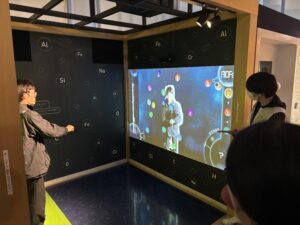
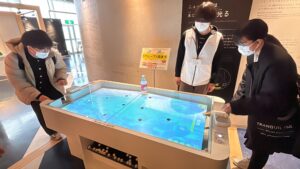
left:The team all-rounder gentleman Watari-kun trying out a game about making matter by sticking atoms together
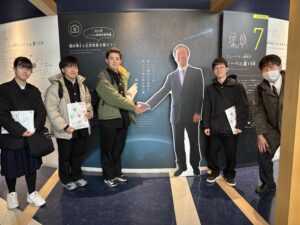
right:The team’s secret weapon Yanaba-kun, who joined the trip as an extra sub-in, shaking hands with a cutout of Nobel Prize winner Takaaki Kajita
left:Data organization master Fuchigami-san and endless machine tinkerer Akasaka-kun learning about the mechanism that releases light inside Super-Kamiokande when a neutrino hits the water
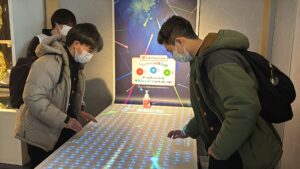
right:The Akasaka-Yanaba duo figuring out the transformation known as “neutrino oscillation” through a struggle with a game where you have to tap only tau neutrinos
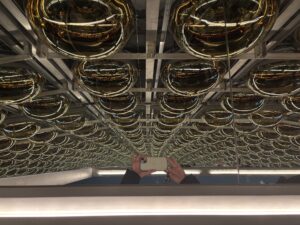
left:Models of the light sensors and photomultiplier tubes inside Super-Kamiokande. The originals are so diligently recreated it feels like the real interior of the water tank!
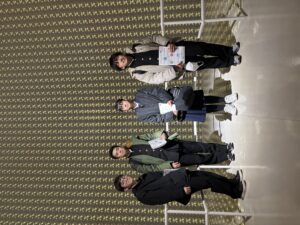
right:A shot of the Four Musketeers of Science and Mathematics in front of a huge panoramic CG recreation of the interior of Super-Kamiokande
●Super-Kamiokande
Onward to Super-Kamiokande, the birthplace of a Nobel Prize in Physics!
The world’s most sensitive neutrino observation takes place far down a deep, rugged tunnel. Using a supermassive water tank, Super-Kamiokande detects neutrinos changing flavor as they pass through the water — the famous process known as neutrino oscillation. The discovery of this process earned Dr. Takaaki Kajita a Nobel Prize in Physics. But Kamioka has been leading the world’s neutrino research for longer than that: the preceding Kamiokande facility was also used in Dr. Masatoshi Koshiba’s Nobel Prize-winning observation of neutrinos emitted from a supernova.
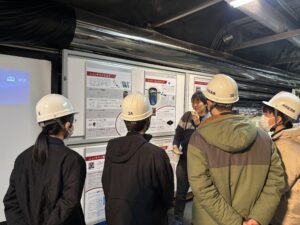
left:A researcher explaining the information panels
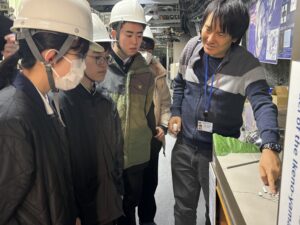
right:The students looking at a model of Kamioka Mine
After arriving at Super-Kamiokande, the students first watched a video overview of the facility and listened to a talk from one of the researchers. The students had many questions to ask, from why the water tank was designed cylindrical to how the researchers tell the difference between solar neutrinos and neutrinos emitted from J-PARC.
Following on from the researcher’s talk, the group arrived at the top of the massive tank used to catch trillions of neutrinos every second. The towering domed ceiling made the tremendous size of the space starkly apparent. The students asked the researchers rapid-fire questions, the sight of the world’s most sensitive neutrino observatory etched into their eyes.
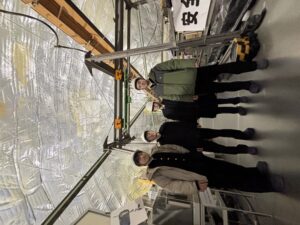
left:Experiments are taking place right under their feet!
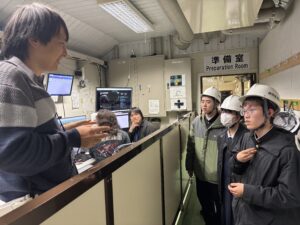
right:A discussion in the control center
 Continuing the tour, the students visited the control center, where the researchers monitor neutrinos passing through the facility at that very moment on computer screens. They observed the rings of light displayed on the screens in real time, and learned about the differences between tracking neutrinos that pass through the tank and neutrinos that react to the water. Even their chaperone science teacher couldn’t resist asking advanced questions fitting of his profession — the experience was extremely rewarding for him as well as for the students. The group also learned about Hyper-Kamiokande, a facility currently under construction that will have 10 times the research power of Super-Kamiokande. Isn’t it amazing to imagine that research that would normally take 100 years could be completed in just 10?
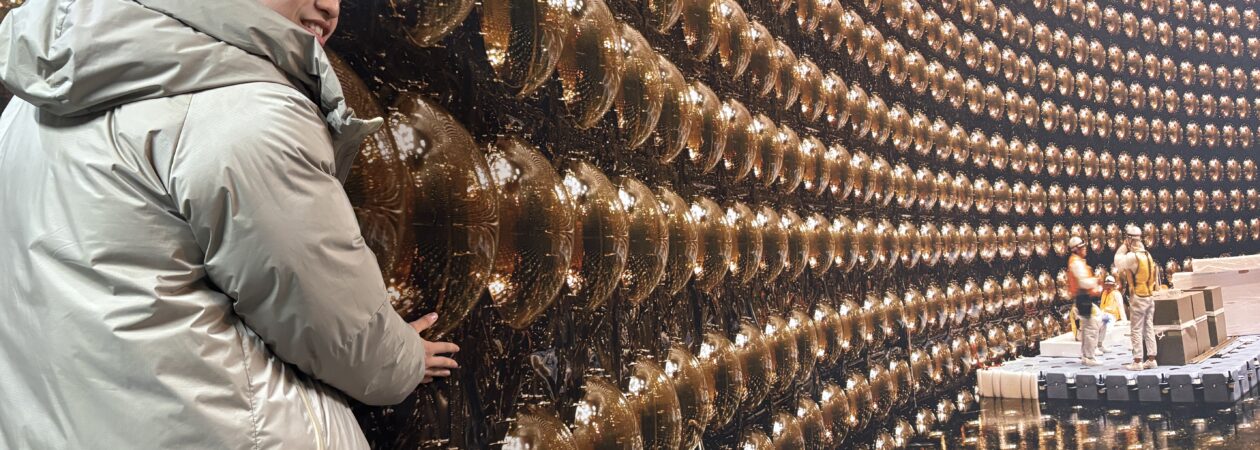
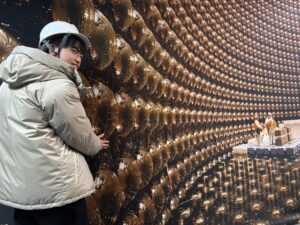
Finally, the students took commemorative photos in front of a wall display of the facility’s photomultiplier tubes. This aesthetic spot makes it look like they’re standing inside the water tank!
●KamLAND (Kamioka Liquid Scintillator Anti-Neutrino Detector)
If Super-Kamiokande can be likened to a huge water telescope that observes neutrinos emitted from space, KamLAND is a liquid measuring device for the precise study of neutrinos emitted from facilities such as nuclear reactors. Instead of water, KamLAND uses a special substance called a “liquid scintillator.” Through this liquid, light can be measured extremely sensitively, so researchers can accurately study even the faintest reactions. At first glance the students were unable to tell the liquid scintillator apart from regular oil, but once ultraviolet light hit it, the blue glow made its unique nature clear.
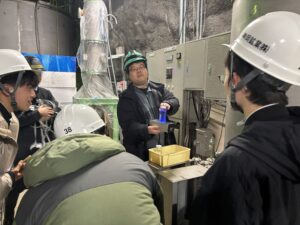
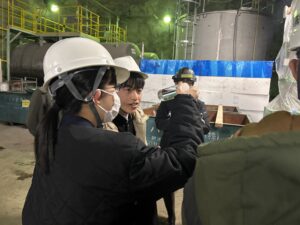
left:The liquid scintillator changing color under ultraviolet light
right:Observing a sample of the liquid in a small bottle
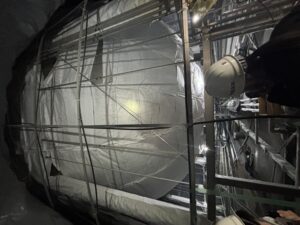 Renovation work had begun on KamLAND a year earlier in preparation for the future KamLAND 2, so all of the liquid had been drained. However, these circumstances actually opened up a special opportunity for the students: because there was no water surrounding it, they were able to see the balloon that holds the liquid scintillator itself. (In March 2025, you could even enter the balloon and see the photomultiplier tubes inside before they were removed. If you went through the narrow entrance underneath the balloon — barely wide enough for one person to squeeze through — and looked around, an overwhelming sight would have unfolded before your eyes.) The inside of the tank smelled strongly of oil — it was a precious chance for the students to experience the reality of working at the research facility with their eyes, their ears and their noses.
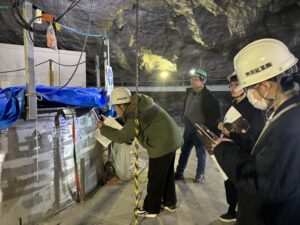 The students even snuck into the dome above the tank. The photomultiplier tubes had been removed a few months prior, so they were able to ask about how the removal process worked. It involved building scaffolding from the entrance at the top of the tank into the balloon, which was filled with water, then entering on an aerial lift platform to take each photomultiplier tube one by one. There were a few people who fell from the scaffold into the water along the way… The students eagerly snapped photos and took detailed notes from the researchers’ explanations.
After that, the students completed their tour of KamLAND with visits to the various other facilities, such as the cleanroom and the distillation-based water purification system. Next year, the balloon is due to be filled with new liquid scintillator, so the students were all excited for KamLAND 2 to begin operations in the near future. They said they definitely want to come and see it again!
By the way, since KamLAND is inside a mine, there are lots of ups and downs and places unreachable by car. The students walked all the way along those maze-like routes on foot. In just that one day, they counted over 10,000 steps — what great exercise!
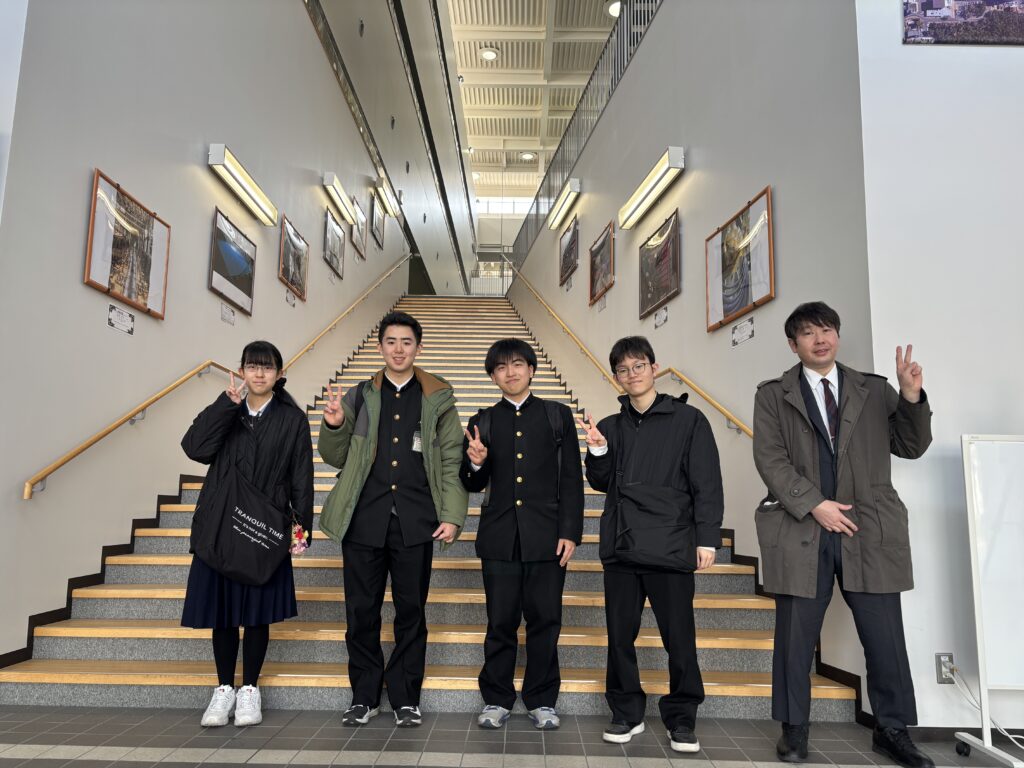 Over the four days and three nights of this trip, the students saw more than just huge research facilities. They also witnessed the researchers’ passion for unraveling the mysteries of the universe and discovering the origins of matter, and got a taste of a challenge that will last 100 years into the future.
As Iwate continues to work towards the construction of the International Linear Collider (ILC), this training served as a natural progression and encouragement of the students’ scientific studies, following on from the independent research they carried out as part of the science and engineering contest. Each of the facilities they visited is a site where world-class research is conducted. We hope that their experiences seeing the forefront of global science will form their next steps towards becoming future researchers, engineers, and talent that will support the ILC.
Japanese
【いわての高校生、世界最先端研究施設に潜入!~教科書のその先へ~ スーパーカミオカンデ・カムランド編】この春、岩手県内の高校生たちが、日本が誇る世界最先端の研究施設を訪れました。
この研修に参加したのは、THE KITAKAMI TIMES第218号でお伝えした、「いわての高校生サイエンス&エンジニアリングチャレンジコンテスト」で第1位に輝いたチームの4名。
第1回は、中性子やミュオン、ニュートリノ、K中間子などのビームを生成している「大強度陽子加速器施設(J-PARC)」の見学の様子を紹介しました。第2回となる今回は、J-PARCから放たれるニュートリノを受け止めて性質を解明する「スーパーカミオカンデ」、原子炉ニュートリノなどの解析を行う「カムランド」での見学の様子を紹介します。
●ひだ宇宙科学館カミオカラボ(Hida Space Science Museum “KamiokaLab”)
カミオカラボがある神岡町は、スーパーカミオカンデをはじめとする宇宙と素粒子の謎を探究するための研究拠点が集まっています。スーパーカミオカンデを訪れる前には、このラボの展示やゲームを通じて、施設の研究内容や魅力についてサイエンスコミュニケーターに案内いただきながら事前学習を行う機会を設けています。
(写真)
・原子と原子をくっつけて物質を作るゲームに、”文武両道の優しき男”渡君が挑戦
・代打で研修に参加した今回の”秘密兵器”簗場君がノーベル賞受賞者の梶田隆章博士のパネルと握手
・ニュートリノが水にぶつかって、スーパーカミオカンデ内で光が放たれるしくみを学ぶ、“データ整理マスター”渕上さんと、”いじった機械は数知れず”の赤坂君
・「ニュートリノ振動」と呼ばれるニュートリノの変身を理解し、タウニュートリノだけタッチするゲーム、赤坂・簗場コンピは大苦戦
・スーパーカミオカンデ内部の光センサー、光電子増倍管の模型は実物に忠実に再現されていて、まるで水槽の中にいるような感覚
・スーパーカミオカンデの内部をフルCGでリアルに再現された大パノラマの前で理数科4銃士をパチリ
●スーパーカミオカンデ(Super-Kamiokande)
ついに、ノーベル物理学賞が生まれたスーパーカミオカンデへ!
ゴツゴツとした坑道を突き進んだ先で行われているのは世界一の感度を誇るニュートリノ観測。超巨大な水槽で行われるこの観測は、飛んでくる途中でニュートリノの種類が変わる、かの有名な「ニュートリノ振動」が発見され、梶田隆章博士のノーベル物理学賞の受賞につながりました。前身のカミオカンデでも、超新星爆発によるニュートリノ観測に成功しており、小柴昌俊博士がノーベル物理学賞を受賞しています。神岡は長年、世界のニュートリノ研究をリードしてきました。
ここではまず、スーパーカミオカンデの概要について動画を視聴したあと、研究者によるパネル解説が行われました。生徒からは、水槽の形についてどうして円柱形としたのか?J-PARCからきたニュートリノと、太陽から降り注ぐニュートリノはどのように見分けるのか?など、数多くの質問が飛び出しました。
パネル解説のあとは、まさしく毎秒数兆個のニュートリノをつかまえている巨大な水槽の真上に到着!大きく高い天井はドーム型になっており、空間の広さが際立ちます。ここでも生徒たちは、研究者に矢継ぎ早に質問し、世界一の感度を誇るスーパーカミオカンデの現場を目に焼き付けていました。
続いては、コントロールセンターで、今まさに通り抜けているニュートリノなどのデータをモニターで観察。リアルタイムで映し出されるリング状の光を見ながら、タンクを通り抜けたニュートリノ、水と反応したニュートリノのモニタリングの違いなどを学びました。引率の教員もたまらず理科教員ならではの高度な質問を投げかけ、理科教員にとっても非常に実りのある時間となりました。現在、スーパーカミオカンデの10倍の実験能力を持つハイパーカミオカンデ(Hyper-Kamiokande)が建設中です。100年かかる研究が10年で終わるなんて、すごいことですよね。
最後は、光電子増倍管(Photomultiplier tube(PMT))のパネル前で、水槽の中にいるような“映え”写真を撮影できるスポットで記念撮影!
●カムランド(KamLAND=Kamioka Liquid Scintillator Anti-Neutrino Detector)
宇宙から飛んでくるニュートリノを観測する巨大な水の望遠鏡がスーパーカミオカンデだとすると、原子炉などからくるニュートリノを精密に図る液体の測定装置がカムランドです。カムランドでは、水ではなく、液体シンチレータという特殊な液体を使って測定します。光を非常に敏感に測ることができるため、弱い反応でも精密に調べることができます。見た目では、普通の油と液体シンチレータはどちらがどちらかはわかりませんでしたが、そこに紫外線をあてると、液体シンチレータは写真のように青く発光し、性質の違いは明らかでした。
カムランドは、1年前から、カムランド2に向けた改修工事が行われており、すべての液体が抜かれている状態。その状態だからこそ、見学できた場所もありました。それは、液体シンチレータを入れるバルーン。周りの純水がないからこそ見られる光景です。(2025年の3月は、このバルーンの中にも入ることができ、取り外される前の光電子増倍管を見学することができました。1人がやっと通れるバルーン下の狭い入口から入り、自分の目の前だけに広がる圧倒的な光景でした。)タンクの中は油の臭いがとても強く、目、耳、鼻でも研究施設のリアルを感じる貴重な体験でした。
さらには、タンクの上のドーム部分にも潜入。この研修の数か月前には、光電子増倍管の取り外し作業が行われており、その様子を聞くことができました。水を入れたバルーンの中に、タンク上部の入り口から足場入れて、ゴンドラで内部に入ってひとつひとつ取り外しの作業をします。この作業では、やっぱり、足場から水に落ちる人が数名・・・。生徒たちは熱心に写真を撮ったり、研究者の説明を細かくメモしたりしていました。
そのあとは、蒸留法による純化装置設備やクリーンルームなどのさまざまな設備を見学し、生徒たちはカムランドの全貌をコンプリートしました。来年には、新しい液体シンチレータを流し込むとのことで、生徒たちはカムランド2が近い未来に動き始めることにかなり期待している様子で、ぜひまた来たいとの感想が聞かれました。
ちなみにカムランドは、鉱山の中だけあって、車では入れない場所があったり、起伏があったり、迷路のような道をすべて徒歩で移動しました。歩数計を見たら、この日だけで1万歩歩いていて、とてもいい運動!
●まとめ
3泊4日で行われた研修を通して、生徒たちが目にしたのは、巨大な研究施設だけではありません。そこには「宇宙の謎を解き明かしたい」「物質の根源を解き明かしたい」という研究者たちの情熱と100年先につながる挑戦がありました。
現在、岩手県では国際リニアコライダー(ILC=International Linear Collider)の実現に向けた取組が進められています。今回は、コンテストをきっかけとした生徒主体の研究を深めることからはじまり、今回の研修はその発展形として生徒たちのさらなる学びを後押ししました。生徒たちが訪れた施設は、世界最先端の研究拠点です。世界につながる科学の最前線を体感した経験が、未来の研究者や技術者、ILCを支える人材への第一歩になったことを願っています。